Franco-Zulu beat swords into ploughshares
Tourism Adventure, DiscoveryPosted by Sangweni on 2026-06-09 15:53:20 | Last Updated by Sangweni on 2026-09-02 06:49:30
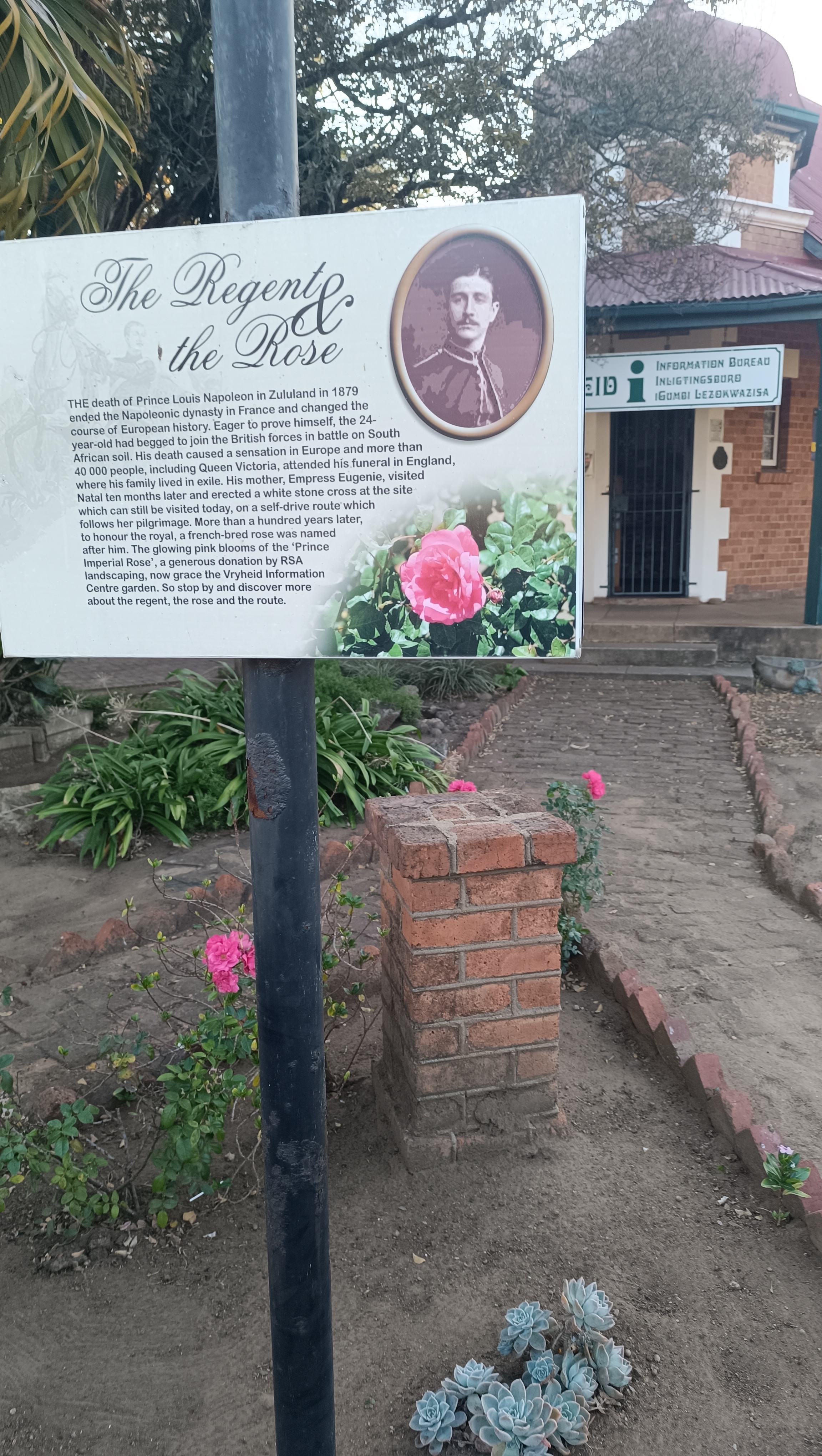
Despite Prince Imperial Louis (Loulou) Napoleon’s tragic untimely death
on June 1, 1879, aged only 24 years, at the hands of incensed Zulu warriors, his
monument has cemented a Franco-Zulu bond that is bearing the fruits of change,
out of his monument.
The bridges are laid firm on the foundations of education, tourism and cultural development of Uqweqwe residents, whose Zulu warriors in Loulou killed the last hope for the restoration of the House of Bonaparte to the French throne.
Loulou, who had no children, is the son of Napoleon 3rd, the brother of Napoleon 1, the revered military genius and prominent 17th-century European ruler.
This month, June 1, marks 147 years since the demise of Loulou, alas Prince Imperial, six months after the end of the Isandlwana war that saw British troops suffer a gargantuan defeat at the hands of King Cetshwayo's brave Zulu warriors.
The British never forgave King Cetshwayo for humiliating them on the battlefield and subsequently sought and carried out their revenge against his son, King Dinuzulu.
King Dinuzulu was confined twice in St Helena and was pursued and persecuted in a concerted effort to ultimately destroy the Zulu empire across the uMzinyathi River.
Uqweqwe means dry plain in isiZulu, and this arid plain has been home to
the Prince’s Imperial monument under the trees, where he died with two
British troopers, whose plaques are testimony to the triple fate.
An unidentified Zulu scout’s plaque lies outside the rock monument
precinct in a fenced spot across the valley where the Zulu warriors took his
life for fighting and scouting on behalf of the enemy.
The existence of Prince Imperial’s monument,
in contrast, defies his motive to join the war he lost, backing the wrong horse, as it is today, helping
fight a just war against poverty and neglect in his honour.
The launch of Roots of Imperial at the monument site since 1996
nurtured a Franco-Zulu affair of education, tourism, and cultural development
to lessen the burden of poverty for the otherwise out-of-sight rural Uqweqwe community.
The spot where the prince was killed, disrupting his coffee break, is a
spark that lights the lives of a needy community whose ancestors in 1879 were invariably his
sworn enemies; he sought to destroy.
This nascent Franco-Zulu peace pipe saw in 2017 the launch of the Route King
Dinuzulu ka-Cetshwayo tourism trail, which is paralleled with the life of
Prince Imperial and his great uncle, Napoleon 1.
King Dinuzulu and Napoleon 1 were both exiled to St Helena by the
British, while ironically, Prince Imperial's uncle was exiled to England after his
father, Napoleon 111, was dethroned in 1870 in a war with Prussia.
It is the same setback also suffered by King Cetshwayo, whom the British
dethroned and incarcerated in St Helena.
Prince Imperial’s fate had something wanted in Uqweqwe to build and not
to destroy through his Roots of Imperial at his monument, which today the French community in South Africa remembers every June 1, jointly with the Uqweqwe
community.
The day turns out to be a semblance of a Rainbow Nation in action in comparison to Heritage Day; the Afrikaner community celebrates separately on the horizon of Blood River in eNcome, where King Dingane made them see stars.
The provision of classrooms, water pumps, and musical instruments to Uqweqwe High School, situated near Loulou's monument, is the scent that cleanses the blood spilt in the past, washing away the
pain of poverty, want, and neglect, notwithstanding the British settler greed to steal land.
The cherry for the forgotten community is that the tour guides are local
Uqweqwe High School students, who have been taught to speak French fluently,
and some of them end up in the Tourism and Hospitality Industry studies as
careers.
The Route King Dinuzulu ka-Cetshwayo tourism cojoined with the Roots of Imperial tourism route is, while an unofficial La Grande Franco-Zulu treaty, a colourful cultural historical story of how a French prince died fighting in an English army against Zulu warriors in Isandlwana.