Mkame scavenges hidden beauty
Senzeni Na? Tests, Trials, ConquerPosted by sangweni on 2026-04-02 00:20:28 | Last Updated by sangweni on 2026-09-02 06:50:11
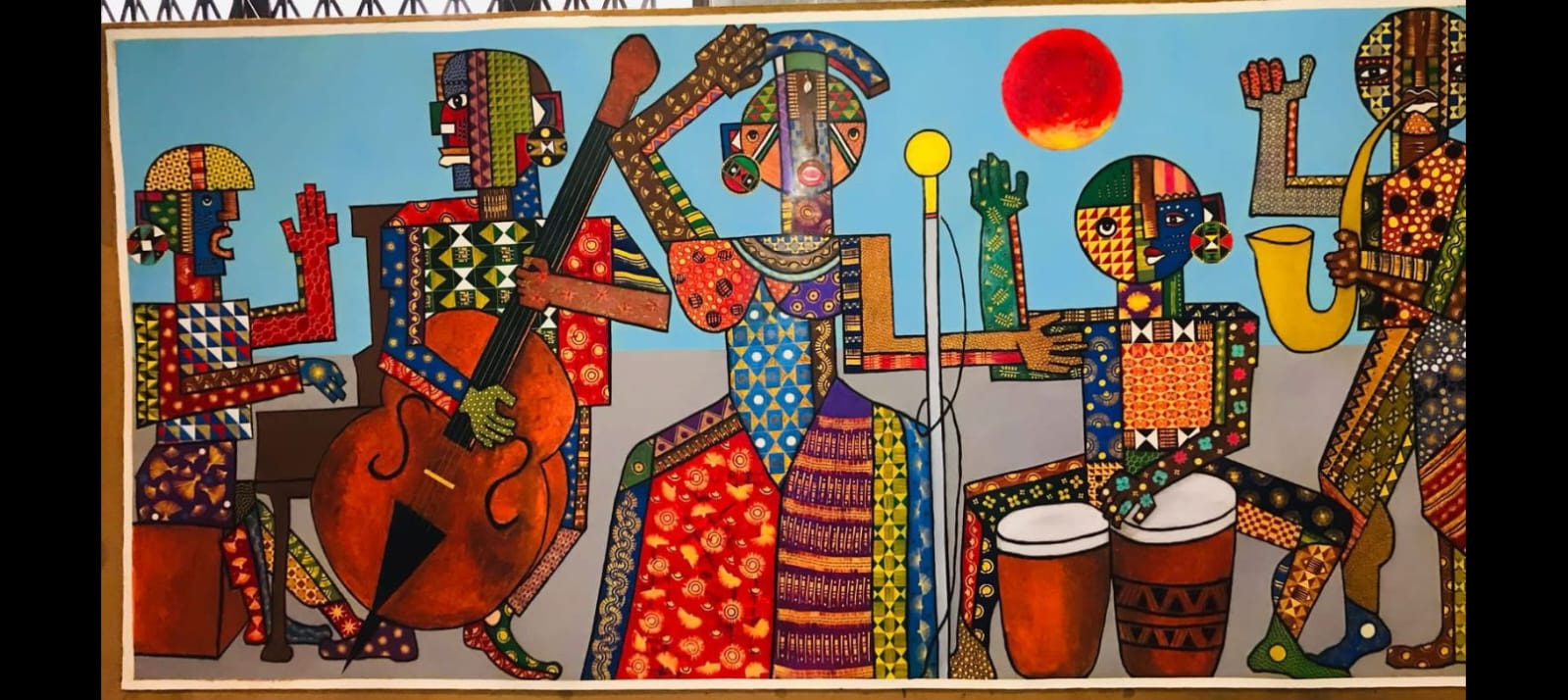
From the days when his explosive visual art exposed the
injustices and inhumanity of apartheid, Sifiso Mkame has come full circle and
like wine is maturing with time but still a rebel with a cause.
His artistic prowess and focus is no longer about immediate
surroundings but about Africa particularly the heroic roles of African women
warriors.
Mkame’s art is today grabbing attention via social media
platforms bringing local and overseas customers to come knocking on his door at
in Nazareth in Mbomvu street, outside Marianhill.
His house is both a studio and family home, where he lives
with wife, son and daughter. The lounge is stacked with books he keeps on sight
as his great source to find his metaphors to tell forgotten heroic stories of
African women warriors.
It is a seismic transition from his signature works he is
revered for when he exploded into the art scene in 1984 sketching his famous
Letters to God and Letters for My Child.
He explains that the sketches were a metaphor, to expose the
pain and suffering apartheid inflicted on his Clermont community, west of
Durban.
The transition is a far cry from his silk screen printing
days, hassling and denied having own bank account. Then artists were not
recognised as workers under apartheid. His earnings were deposited into his
mother’s account, Lizzy Mkame.
Today his cell-phone is not only an audio device but
literally a hand-held warehouse of his colourful stock about the history and
heritage of Africa as a continent, he swears allegiance to, with his life.
Though he has unfinished business about failing to switch to
oil painting and sculpture by 1994, a ten-year period mark he set himself from
1984 to graduate from silk screen printing, he is happy where he is.
“I will die using oil pastel now, I am like one with oil
pastels. Colour attracts me. I apply
yellow, orange, red up to dark ones. I use a razor blade to tell my story. I
scrape, it is like scavenging for hidden beauty.
The blade is my weapon. I am using African masks which were
used by Africans for ceremonies. They had masks for great harvest and others to
appeal to ancestors for when woman couldn’t bear a child. They will use masks
carrying a child.
I am reminded of warrior women from Gambia and Benin. My art
is no longer focusing on SA. I have broadened my horizon. It is not going back;
it is about learning from my past to go forward.
I still do figurative work and still combine it with social
issues. My work deals with women abuse; child pregnancy; virginity testing and
also about love.
Though letter writing is no longer an overriding focus in
his art work, Mkame remains true to his calling to be an artist who is a mirror
of his society and changing the human condition.
“When we were oppressed; I thought who should we address our
grievances to. Who do you write to? I thought about a child who would be born
into this situation.
It was a letter for an unborn child. In the Letters
to God, I was addressing and questioning God how can He allow us to be
oppressed. Where does church help us that we pray at and talk about Him.”
Since finding out that masks were and are still symbols that
represent Africa, he is on steroids to tell history to elevate African pride
and identity.
“My work deals with celebrating anything African because I
am an African and Africa is one. Women warriors like Jahomie, Amazon soldiers
from Benin and Ndzinga feature prominently in my artwork.
One of his current works, three-metre-long is about paying
homage to Miriam Makeba, he admires for putting Africa on the map and
influencing the emergence of musicians like Angelique Kidjo, to embrace singing
in African languages.
“If I make a portrait of person. It represents Africa”.
Why has he chosen using masks to tell history and the plight
of women?
“My work is not about being nice, it is about the hardships
and the plight of feminists. Maybe it is because I was brought up a single
parent. My mother was also my father.”
He worships his mother for raising him and his siblings with
an absent father who only visited them in December when he came to order
coffins since he ran a funeral parlour in the Eastern Cape.
“My father did not contribute anything. I had no maternal
uncles. My mother had three sisters. I was surrounded and brought up by women.
I had no role models. My maternal uncle died in 1963 when I
was born. This is the reason I empathise with women in my art.
I know what women go through and went through. They used to
be oppressed and ill-treated by men and it was normal that they were treated
like that.”
It is this unwavering stance that defines Mkame as an
unapologetic rebel with a cause who resists being told what to project in his
art or work within themes, after 34 years of his labour of love.
He remains resolute in what he wants on his artistic voyage
out of the past, present and the future.
“I do not do paper sketches; I just attack the paper as is.
I work with something that comes to me.
If you want me to work to a theme, I don’t commit myself. It
should be something I see on paper.
I don’t have preconceived ideas. Once I put colours. I see
images I help to create. I don’t want to be stuck. I want to be free. I assist
what I see on paper come to life.”
Sadly, Mkame though creatively standing his ground guided by
his defiant motto ‘no retreat, no surrender’, he feels ‘the more things change
the more they remain the same.’
He takes a deep sigh before he quips: ‘It is more difficulty
if not harder today.
Gallery owners, people who write books about art, are still
white people. If there are overseas exhibitions, it is still the same people
who represent South Africa despite that we have a pool of Black artists.
They are still in control and dominant. You end up not being
included. When you mention your price for your work, gallery owners tell you it
is not worth the price whereas young white artists sell theirs for a fortune.
It pains him that the late Durant Sihlali’s art work remains
undervalued due to prevalent status quo that people who have buying power for
art remains white people despite many Black people having disposable income
post-apartheid.”
Continued control of galleries and exhibition spaces by mainly
white curators does not the least make Mkame absolve Black people for their
lack of art appreciation and associated value.
Mkame feels a sizeable Black middle class is obsessed and
caught up in material vulgar in a rat race to be seen to have arrived.
He is unimpressed that Black people who have disposable
income are not collecting art though not entirely discounting that education
about art is still an issue in Black communities.
His gripe is that Black people some of whom he knows and
grew up with who can afford, avoid buying art despite that it will have far
more value, as an investment in future.
“The strange things are that the very same people are ready
to offer you expensive liquor without any qualms.”
It is a moot point that lack of art collection and
appreciation is prevalent in his hometown of KwaZulu-Natal compared to Cape
Town and Johannesburg.
Mkame prides himself that he is still a social commentator
for the people who through his work continues to tackle issues about changing
the human condition.
The difference is that Mkame is that today tells stories
using new motifs, different tones and texture versus his yesteryear direct
approach in silk screen exposing apartheid as an evil to destroy.
His June 16 T-shirt that got his niece Smiley
detained spending her 16th birthday in jail on June 16, 1987 is an
example of how he threw hurtful punches against a state of emergency, in
force.
Moreover, the following day the same T-shirt landed one of
his bosom friends Musa Ndwandwe in trouble who was picked up by
police and released a day later, after a night in custody.
“I felt it should have been me who should have been
arrested. Smiley was very young. I felt very bad that I was responsible for her
arrest. Why didn’t they come to me?
His meteoric rise and personal triumph over man made
obstacles is underscored by that he took it upon himself to discover things for
himself.
“I am mostly self-taught. I like to read a lot. The same
message still carries on but I am using masks. As one grows and learns that
Africa was once one, I am an African. I can’t differentiate myself from the
rest of the continent.”
It is history that Mkame has risen like a Phoenix out of
apartheid ashes to the present-day artistic giant after literally stealing his education
in art.
Mkame in his quest to be himself, inadvertently, with his no
surrender spirit broke into pieces the social engineering, that the Group Areas
Act, sought to achieve.
In his theft, his accomplices were empathic former Technikon
Natal lecturers, John Room and Janie Jordaan who organised for him to attend
secret art classes at the then segregated whites only institution.
‘Room and Jordaan used to sneak us through the back entrance
at Technikon Natal on Saturdays in Smith Street because black students were not
allowed to study there in 1982.
They taught us print-making.
It made us feel great because we were learning a new skill. At Bangani
Open School, I used a spoon to do woodcut. They did not have a printing press.
While I was at Bangani, Room and Jordaan used to come. They
were friends with Joe Ndlovu who was in charge at our school.
They invited a few of us to come on Saturday to the
Technikon. We would sneak in and the security guards did not bother us because
we came with white people who were duck-tails bike riders.”
Mkame talent caught the attention of another discerning
Technikon lecturer Barry Maritz, who instantly liked his work and gave him wood
blocks.
“I was used to
working on pastel. He felt it would be something if done on woodblocks.
There were no darkies doing that. He gave us a free reign to
do as we wish and only periodically checked us and comment here and there.”
His recognition saw him being recruited to teach at the
Community Arts Workshop (CAW). When they formed CAW, I was attending at
Diakonia. It was under the Race Relations where Jo Thorpe was struggling with
funding.
It was agreed that we move to CAW and we were happy that we
were going to mix with white people.
Maybe after all, there is honour amongst thieves,
particularly, if sharing the gift of education – that apartheid rulers sought
to deny Black people in order to arrest their development.
Ironically, the current democratic government has christened the continuing chained development as a mythical poverty, unemployment and inequality, to underplay effects of graft and subterfuge.